
Paleo Detox Plan - Understanding the Rules
This is a basic introduction on the principles of the paleo diet.The paleolithic diet which is also called the paleo diet or caveman diet, is a diet based on the food our ancient ancestors might have eaten. These include meat, nuts and berries while it excludes the foods that they have not yet come to know, such as dairy. This diet composes of several strands which talk about the Paleolithic era which is a period lasting around 2.5 million years that ended about 10,000 years ago with the domestication of animals and the advent of agriculture. Proponents claim that human metabolism has been unable to adapt fast enough to handle many of the foods that have become available since the advent of agriculture. Thus, modern humans are said to be maladapted to eating foods such as grain, legumes and dairy, and in particular the high-calorie processed foods that are a staple of most modern diets. Proponents also claim that modern humans' inability to properly metabolize these comparatively new types of food has led to modern-day problems such as obesity, heart disease, and diabetes. They claim that followers of the Paleolithic diet may enjoy a longer, healthier, more active life.
Foods you should eat
- More protein and meat: Meat, seafood, and other animal products represent the staple foods of modern-day Paleo diets. Many experts in the field recommend that this intake should be around 19-35% as this figure is close to the calorie intake in hunter/gatherer diets.
- The Paleolithic diet should have moderate to higher fat intake dominated by monounsaturated fats, polyunsaturated fats and omega-3 fats, but should avoid trans fats, and omega-6 fats.
- Fewer carbohydrates: non-starchy vegetables. The diet states that the consumption of non-starchy fresh fruits and vegetables should provide at least 35-45 % of the daily calorie intake and should be the main source of carbohydrates.
- High fiber: High fiber intake not from grains, but from non-starchy vegetables and fruits.
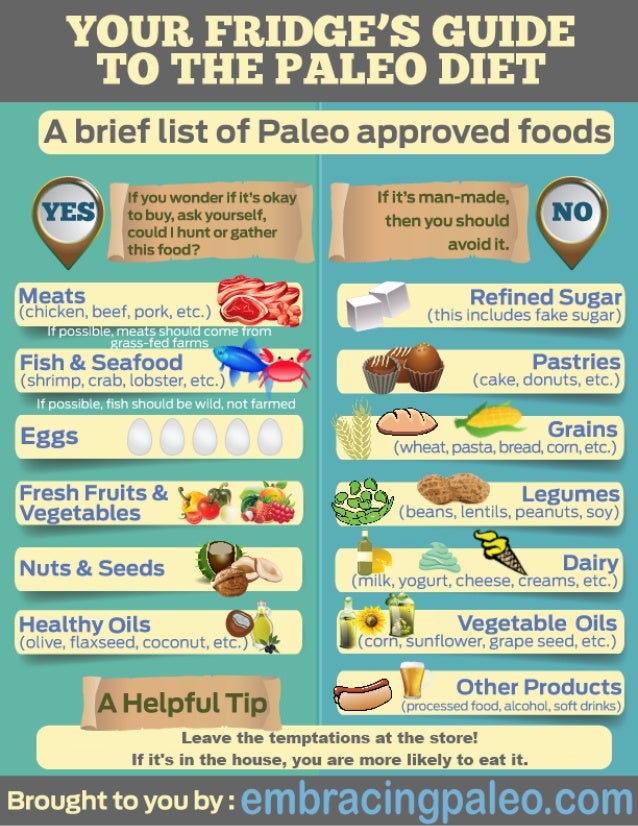
 Foods you should avoid

The following list represents the food groups that experts/advocates claim were seldom consumed by humans before the Neolithic Agricultural Era and are therefore excluded from the diet. These include:
- Dairy products
- Grains, for example wheat, rye, canary seed, and barley.
- Legumes, for example beans and peanuts
- Processed oils
- Refined Sugar
- Salt
- Coffee nor alcohol is considered to be 'paleo' as our human ancestors could not produce such beverages.
Based on further research these are the claims that advocates of the paleo diet make. "Paleolithic humans were generally adapted to eating specifically those foods that were readily available to them in their local environments. These foods therefore shaped the nutritional needs of Paleolithic humans. The physiology and metabolism of modern day humans have changed little, if at all, since the time of their Paleolithic ancestors. The extreme changes in human diets due to the agricultural and industrial revolutions occurred over less than 200 years ago, which is not enough time for genetic adaptation hence their belief.
This is just a a small segment of what this diet entails I do hope it provides some insight to you and will help you in choosing the dietary plan you wish to follow. It is very important that we take good care of our bodies because in return our bodies will take care of us. It is very simple the healthier we eat the less malnutrition associated aliments we'll develop. Remember to live love and stay healthy.
